

1. No loose blankets
Keep soft objects and loose bedding out of the crib for a safer sleep space.
For nights you never know how much is too much, Myra helps you match baby's sleep sack to the room so baby stays cozy longer and you can stop lying awake wondering
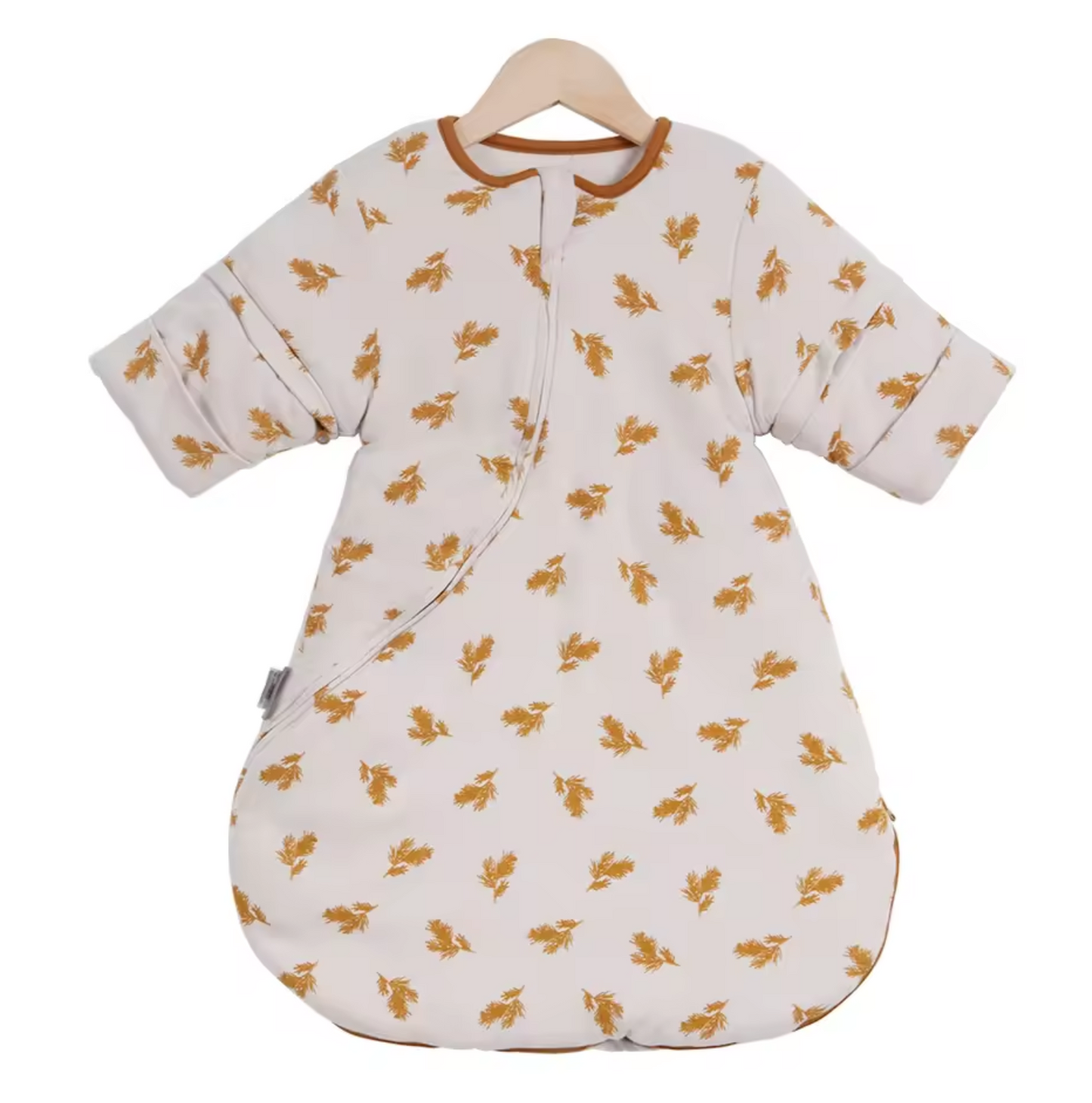
Choose Baby's SleepSack
.png?v=4512714441058172471780375958) Choose Baby's SleepSack
Choose Baby's SleepSack

From cooler rooms to blanket-kicking nights, these are the
little bedtime moments Myra was made for.


Keep soft objects and loose bedding out of the crib for a safer sleep space.

Dress baby in no more than one extra layer than an adult would wear in the same room.

Wearable blankets like sleep sacks can be used when they’re the right size and do not cover the head.


AAP safe-sleep guidance emphasizes keeping loose blankets out of the crib,
dressing baby for the room, and avoiding anything that covers the head.
Myra was designed around the same simple bedtime idea:
wearable warmth, chosen for the room.

 89.2% reported calmer bedtimes within the first week
100.0% felt more confident as a parent at bedtime
97.1% would recommend Myra to a friend expecting a baby
89.2% reported calmer bedtimes within the first week
100.0% felt more confident as a parent at bedtime
97.1% would recommend Myra to a friend expecting a baby

.png?v=180585026599486744521780979038)
.png?v=108580711340583840101780979038)
.png?v=136489998252814060451780979038)
.png?v=163501518474663577111780979038)
.png?v=115542029803205068611780979038)
.png?v=26802390534351844441780979038)
.png?v=20088224775285035551780979038)
.png?v=93509152765652256451780979038)
.png?v=109923326065585722121780979038)
.png?v=101703340123507587871780979038)
.png?v=60872326634310446081780979038)
.png?v=169773891541909480951780979038)
.png?v=124307203328407903791780979037)
 Fast Shipping
Free available
Order today for delivery in as little as Friday, 12th June.
Fast Shipping
Free available
Order today for delivery in as little as Friday, 12th June.
 30 Days Guarantee
Learn more
We want you to love your purchase — but if something’s not quite right, we’re here to help.
30 Days Guarantee
Learn more
We want you to love your purchase — but if something’s not quite right, we’re here to help.
 1 Year Warranty
Learn more
At least 1 Year* Warranty Guarantee Policy.
1 Year Warranty
Learn more
At least 1 Year* Warranty Guarantee Policy.


No sleep sack can promise a specific outcome and we won't pretend otherwise.
What Myra does is remove one of the most common reasons babies sleep gets affected:
being too warm,
too cold,
or uncovered halfway through the night.
When that variable is handled, a lot of parents notice the difference.
Some see it in the first week.
Some take longer.
But it's one less thing working against you.
Myra is built around the same safe-sleep basics the AAP recommends: wearable warmth instead of loose blankets, nothing covering the head, and TOG-rated fabric so you know exactly how warm baby is.
Overheating is a real concern, which is exactly why matching TOG to room temperature matters.
The guide takes the guessing out of it.
Some babies protest the transition, especially coming out of a swaddle.
Give it 3–5 nights.
The sack shape gives legs room to move, which most babies adjust to quickly.
If it's a sizing issue, try the next size.
We offer free exchanges within 30 days for fit issues.
Not the right size or warmth?
Contact us within 30 days and we'll arrange a free exchange.
If you're not seeing the changes you're expecting, we'll sort out a return too with a 100% refund, no questions asked.
%20copy.png?v=98404135538308498511781220616)

When baby is dressed right for the room, one of the most common sleep disruptors goes away. That’s what Myra is built around.

Being too warm or too cold is one of the most common reasons babies stir. Match the TOG to your room, and you remove that variable entirely.

The hand-on-chest loop at midnight. The ‘is she too cold?’ spiral at 2am. When baby is dressed for the room, those checks get quieter — and so does your brain.

More consolidated sleep at night means waking up at 6am feeling recovered — not wrecked. Small difference in warmth. Noticeable difference in your day.

Simple enough to hand off. When the setup is check the room → pick the TOG → zip in, you stop being the only one who can hold bedtime together.

One TOG for your nursery temperature. No stacking onesies and hoping. No 11pm Google spiral. Just the right warmth, matched to the room.

Not every night will be perfect. But when the broken ones get fewer, breakfast happens. Conversation happens. You start feeling like a person again.
.png?v=92493575716561751471781220616)

"Not only did bedtimes go much smoother but on the days where things don't go as planned, I felt at peace that I've done everything I could."

"He stayed cozy, but never sweaty or red. That was the sweet spot I’d been trying to find."


